Creativity is not printed on the label.
A label can tell you category, cannabinoids, terpenes, ingredients, batch details, and warnings. It cannot guarantee that your notebook will fill itself.
Why sativa gets linked to creativity
Sativa-labeled products are commonly marketed as bright, uplifting, daytime-friendly, social, or cerebral. That language naturally gets folded into creativity culture: sketchbooks, playlists, brainstorming, writing, design, and big ideas.
That marketing story may match some personal anecdotes. But anecdotes and branding do not create a universal rule.
Sativa often means “bright daytime vibe” in retail language.
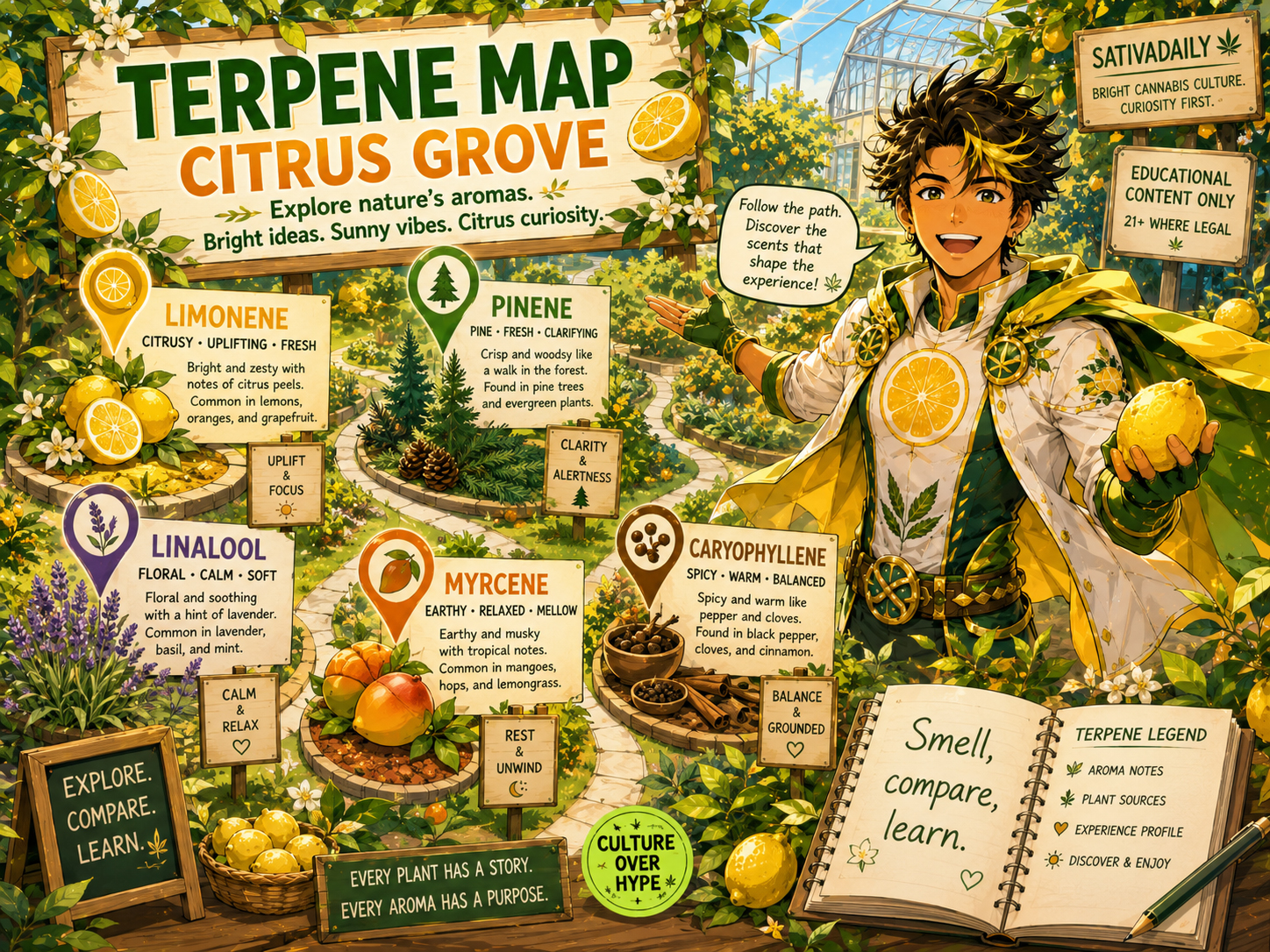
Labels may list citrus, pine, floral, spicy, or herbal terpene clues.
The same label can feel different to different adults.
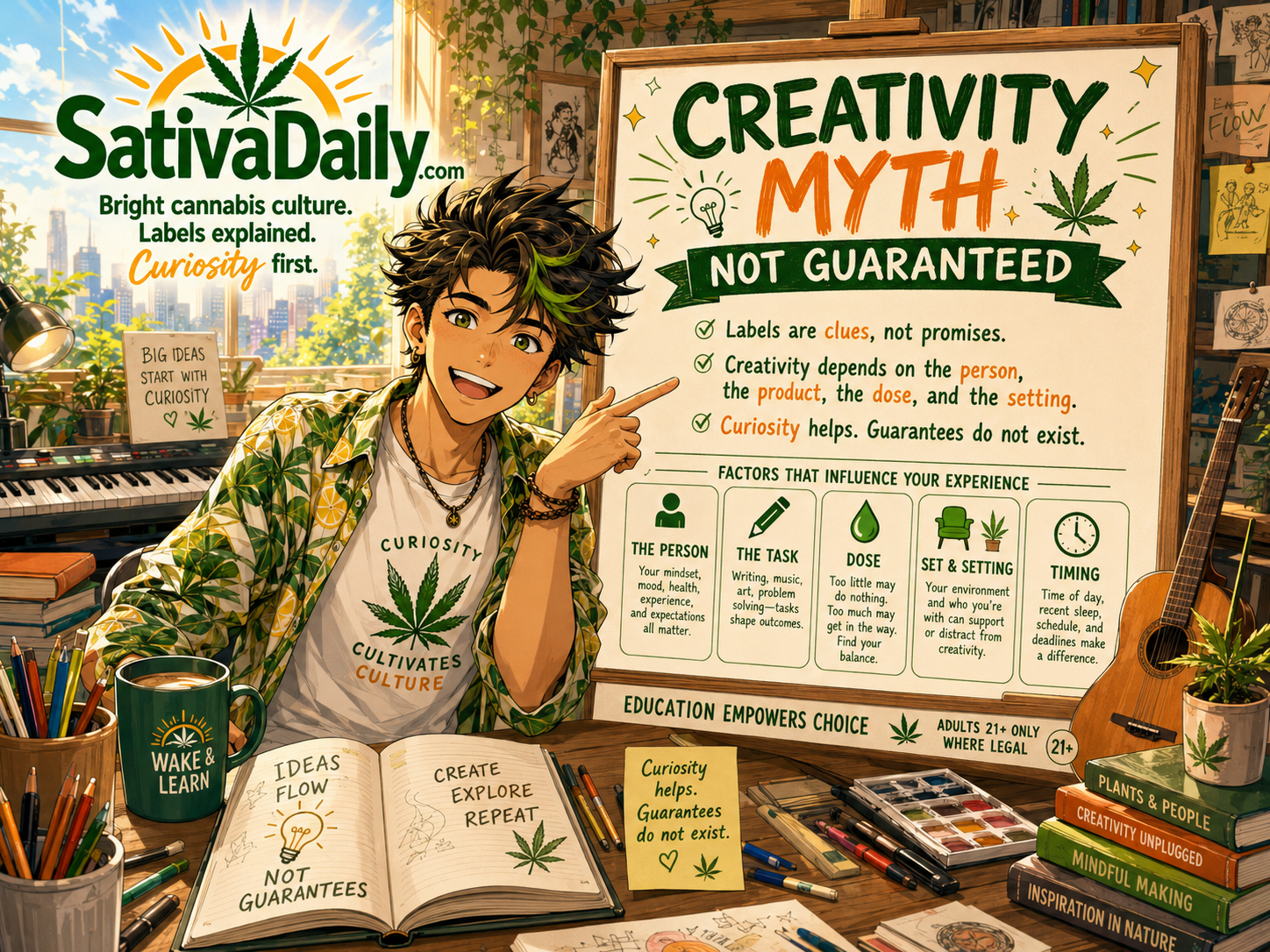
The creativity myth
Myth
“Sativa automatically makes people creative, focused, energetic, and productive.”
Cleaner reality
Some sativa-labeled products are marketed around bright or creative culture, but effects vary by product, person, dose, timing, tolerance, and setting.
What actually shapes a creative session?
Creativity is bigger than a cannabis category. A creative session can depend on your task, skill, mood, sleep, caffeine, deadline, environment, company, distractions, tools, and expectations.
- The task: sketching, writing, editing, coding, composing, and brainstorming all require different kinds of attention.
- The product: flower, edibles, vapes, and tinctures have different timing and label questions.
- The profile: THC, CBD, minor cannabinoids, and terpenes all matter.
- The person: tolerance, biology, prior experience, and expectations vary.
- The setting: light, sound, company, safety, schedule, and obligations matter.
What to read on a creativity-themed label
If a product uses words like creative, focus, energy, daytime, spark, muse, or flow, slow down and read the small print.
| Label clue | Why it matters |
|---|---|
| Product type | Flower, edible, vape, tincture, and concentrate timing can differ widely. |
| THC / CBD | Potency and balance affect the overall product profile. |
| Terpenes | Aroma clues such as limonene, pinene, linalool, or caryophyllene may appear. |
| Ingredients | Especially important for edibles and vapes. |
| Timing warnings | Edibles can take time; impatience can create a bad session. |
| Batch / test information | Helps compare products and avoid mystery packaging. |
Bad ideas Label Goblin loves
- Using cannabis to meet a deadline when you need reliable performance.
- Assuming sativa means “safe to drive” or “safe to work.” It does not.
- Ignoring workplace, school, housing, or local-law rules.
- Using “creative” marketing as medical or productivity advice.
- Taking more because an edible has not shown up yet.
The medical and productivity boundary
SativaDaily does not recommend cannabis for ADHD, depression, fatigue, creativity blocks, motivation, productivity, anxiety, or any medical or mental health condition.
If a health concern, work requirement, medication, or legal issue is involved, talk with qualified professionals and check official rules.
This page explains cannabis culture and labels. It does not recommend cannabis to treat, manage, improve, or guarantee anything.
Better questions than “will this make me creative?”
What does the full label say? What is the product type? What are the cannabinoids and terpenes? What warnings apply? What are my responsibilities today? Am I treating marketing as a clue rather than a promise?
The bottom line
“Sativa and creativity” is a common cultural pairing, but it is not a rule. Sativa is a market clue, not a creative guarantee. The label, the person, and the situation matter more than the myth.
Focus Fairy can inspire the notebook. She cannot fill it in for you.