Labels are clues, not guarantees.
A cannabis label can help you compare products, avoid mystery packaging, and understand what a seller is claiming. It still cannot promise exactly how every person will feel.
Why cannabis labels matter
Cannabis products can vary by cultivar, product type, potency, ingredients, testing, batch, packaging date, and intended use context. A label is the basic map for understanding what is in front of you.
Good label literacy does not require hype. It requires patience, skepticism, and a willingness to read the small print before trusting the large font.
Warnings, age restrictions, impairment reminders, ingredients, and storage guidance matter.
Labels help compare products beyond the strain name or sativa/indica category.
Batch, testing, and ingredient information can help avoid mystery products.
How to decode a cannabis label
Exact labels vary by product and location. Use this as a practical reading order, not as legal advice.
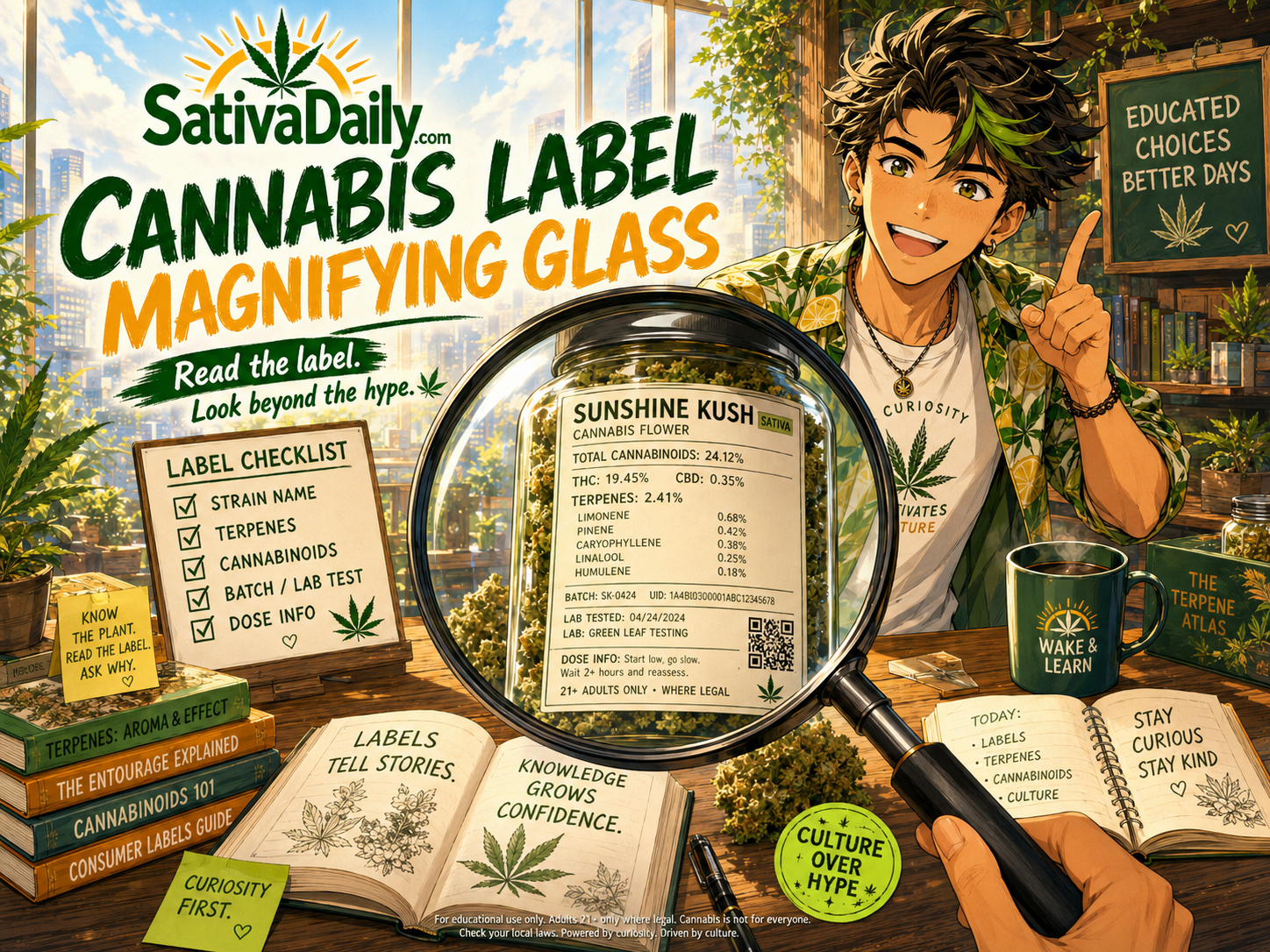
Start with product type
Flower, edible, vape, tincture, concentrate, and topical-style products all raise different label questions.
Read the category
Sativa, indica, hybrid, or other category language is a starting point, not a guaranteed effect.
Check cannabinoids
Look for THC, CBD, total cannabinoids, and any listed minor cannabinoids. Potency matters, but it is not the whole story.
Check terpenes
Look for terpene names and amounts when available. Treat them as aroma clues, not prophecies.
Check ingredients
Especially important for edibles and vapes. Avoid mystery ingredients and vague packaging.
Check batch and testing
Look for batch number, lab testing, test date, QR code, packaging date, or traceability information.
Read warnings
Adult-use, impairment, storage, edible timing, and local-law warnings are part of the label — not decorations.
Example label mindset
This is a simplified mental model, not a real product label and not product advice.
Example reading order:

Product type: Flower / Edible / Vape / Tincture?
Category: Sativa / Indica / Hybrid?
Cannabinoids: THC, CBD, total cannabinoids?
Terpenes: Limonene, pinene, linalool, caryophyllene?
Ingredients: clearly listed?
Batch / testing: visible and traceable?
Warnings: age, impairment, storage, timing?

Conclusion: read the whole label before trusting the name.
THC percentage is not everything
THC can be important, but “highest THC wins” is a Label Goblin shortcut. A product with a higher THC number is not automatically better, safer, more enjoyable, more creative, or more appropriate for every adult.
Lazy shortcut
“Pick the highest THC and ignore the rest.”
Better reading
Compare THC with CBD, terpene profile, product type, serving details, warnings, and your own tolerance.
Terpenes on labels
Terpenes can help explain aroma language: citrusy, pine-like, floral, spicy, woody, herbal, hoppy, or earthy. They are useful for comparison and memory.
They are not guaranteed effect switches. A terpene profile can be informative without becoming magical.
| Terpene | Common aroma language | How to use it |
|---|---|---|
| Limonene | Citrus, bright, lemon-like | Use as aroma clue, not a creativity guarantee. |
| Pinene | Pine-like, fresh, forest-like | Use as profile comparison, not a focus promise. |
| Linalool | Floral, lavender-like | Use as sensory language, not medical advice. |
| Caryophyllene | Spicy, peppery, woody | Use as profile comparison, not a promised effect. |
| Myrcene | Earthy, musky, herbal | Use as aroma context, not a sleep guarantee. |
Different product types, different label problems
The same sativa label means different things across product formats.
Look for cultivar name, cannabinoids, terpenes, batch, package date, and testing details.
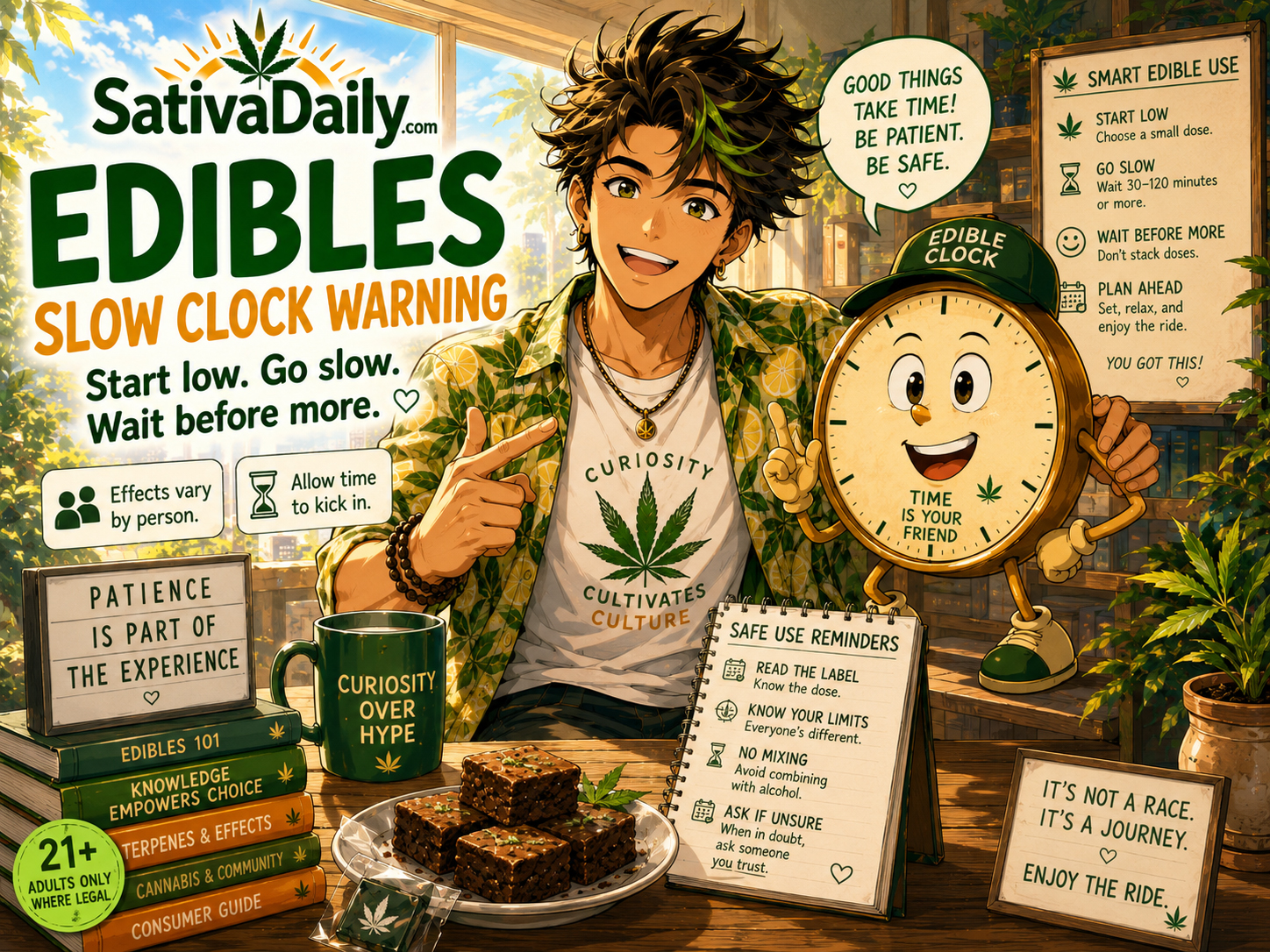
Read serving information, total package amounts, ingredients, allergens, and timing warnings.
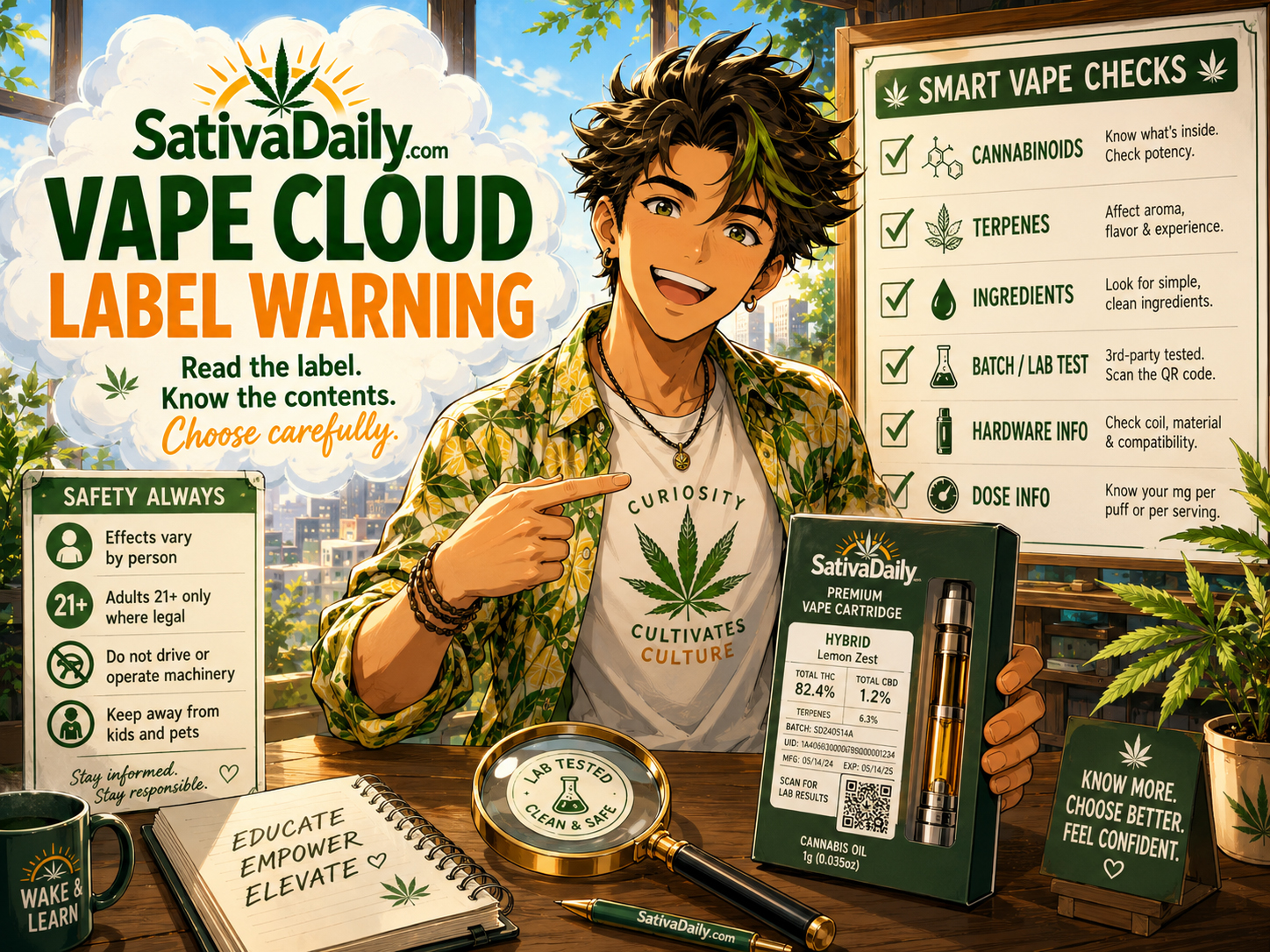
Check ingredients, oil contents, hardware notes, potency, testing, and avoid mystery products.
Label Goblin’s favorite tricks
Label Goblin thrives on shortcuts. These are the tricks to watch for:
- Making the strain name feel more important than the actual label.
- Treating sativa or indica as a guaranteed effect.
- Acting like THC percentage is the only number that matters.
- Ignoring edible timing or serving information.
- Skipping ingredient lists on vapes or edibles.
- Forgetting batch, testing, or package-date details.
- Reading marketing language as medical or productivity advice.
Responsible label literacy
Labels are not just about shopping. They are about adult decision-making, safety, and not letting a cartoon goblin run your day.
Adults 21+ only where legal. Keep products away from kids and pets. Do not drive or operate machinery after using cannabis. This page is educational only and is not medical or legal advice.
The bottom line
Read the whole cannabis label: product type, category, cannabinoids, terpenes, ingredients, batch data, testing, and warnings. The name may be fun. The label is the practical map.
Professor Terpene brings the magnifying glass. Label Goblin brings the confusion. Choose the magnifying glass.