The myth is bright. The certainty is the problem.
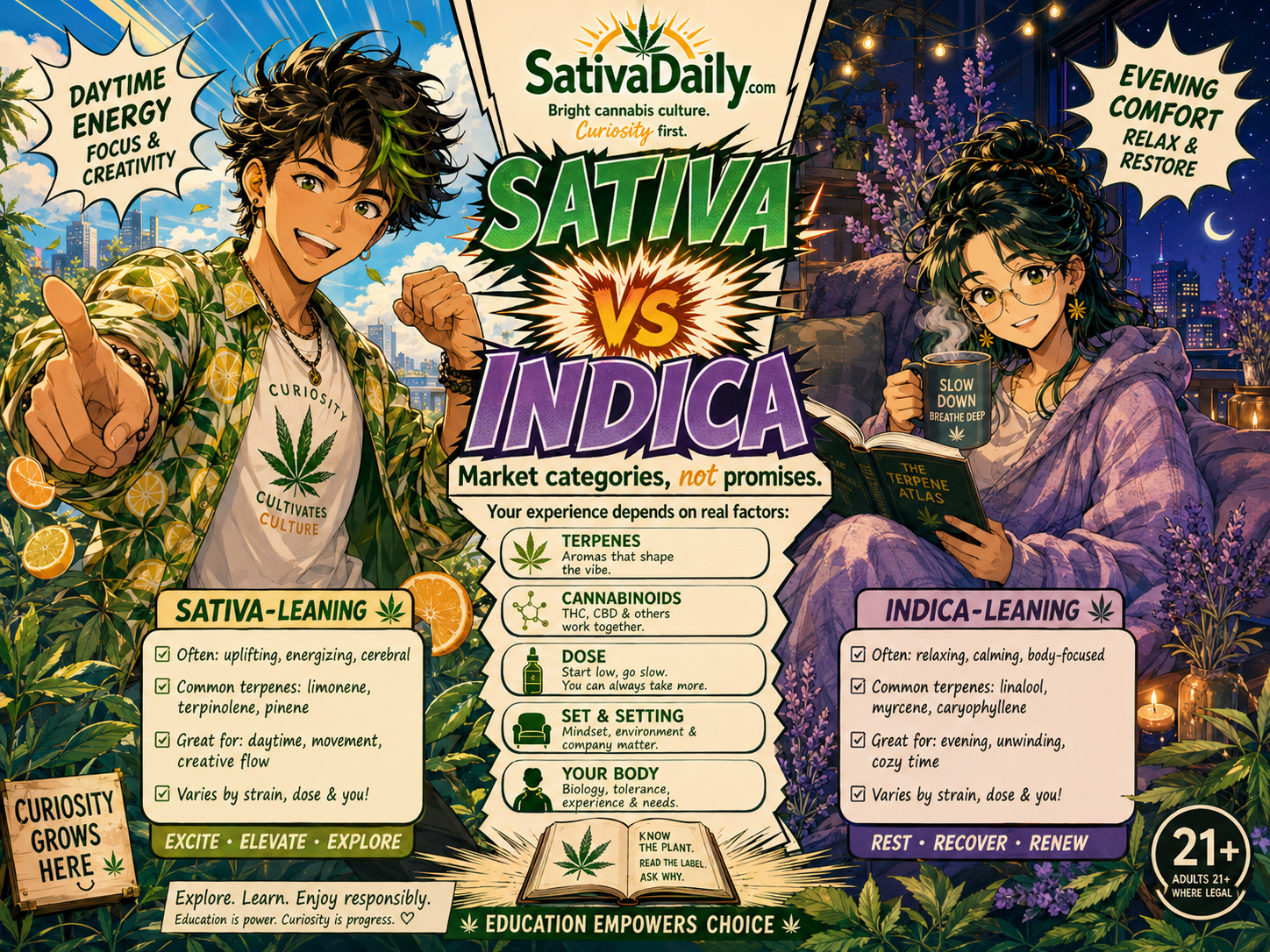
Sativa culture is full of memorable shorthand: creative, energetic, uplifting, daytime, social, focused. Some shorthand can be useful. Some of it turns into overconfident fiction.
Commonly marketed sativa effects
In cannabis culture and retail language, sativa-labeled products are often associated with these ideas:
A common marketing theme, especially for daytime products.
Often used in art, music, writing, and “idea spark” branding.
Frequently implied, but not guaranteed and not universal.
A popular cultural vibe, not a promise or medical claim.
The important phrase is often associated. Not always. Not everyone. Not every product.
Five sativa myths worth retiring
Myth 1: Sativa always means energy
Captain Limonene loves a bright entrance. Marketing loves an easy promise.
Cleaner reality
A sativa label may suggest a bright market category, but energy depends on the product profile, dose, timing, tolerance, and person.
Myth 2: Sativa guarantees creativity
Focus Fairy sprinkles notes everywhere, but ideas still need a brain, a task, and a setting.
Cleaner reality
Creativity is not guaranteed by a label. Product type, dose, mood, context, and individual response matter.
Myth 3: Higher THC means better daytime use
Label Goblin points at the biggest number and declares it sunshine.
Cleaner reality
THC percentage matters, but it is not the whole story. Terpenes, cannabinoids, freshness, product type, and tolerance all matter.
Myth 4: Sativa edibles are predictable
The Edible Clock has heard this one and is already late to correct it.
Cleaner reality
Edibles have different onset timing and duration. “Sativa edible” still requires patience, label reading, and careful adult decision-making.
Myth 5: Sativa can be productivity advice
This is where Compliance Sensei confiscates the whiteboard.
Cleaner reality
SativaDaily is educational only. It does not recommend cannabis for productivity, focus, ADHD, depression, fatigue, or any medical condition.
Why these myths stick
Sativa myths stick because they are convenient. A single word is easier than a full label. A stereotype is easier than a terpene profile. A nickname is easier than admitting that effects vary.
They also stick because many people do have experiences that seem to match the stereotype. The problem is not that every anecdote is wrong. The problem is that personal anecdotes become universal rules too quickly.
Better questions than “is it sativa?”
The sativa label is one question. It should not be the only question.
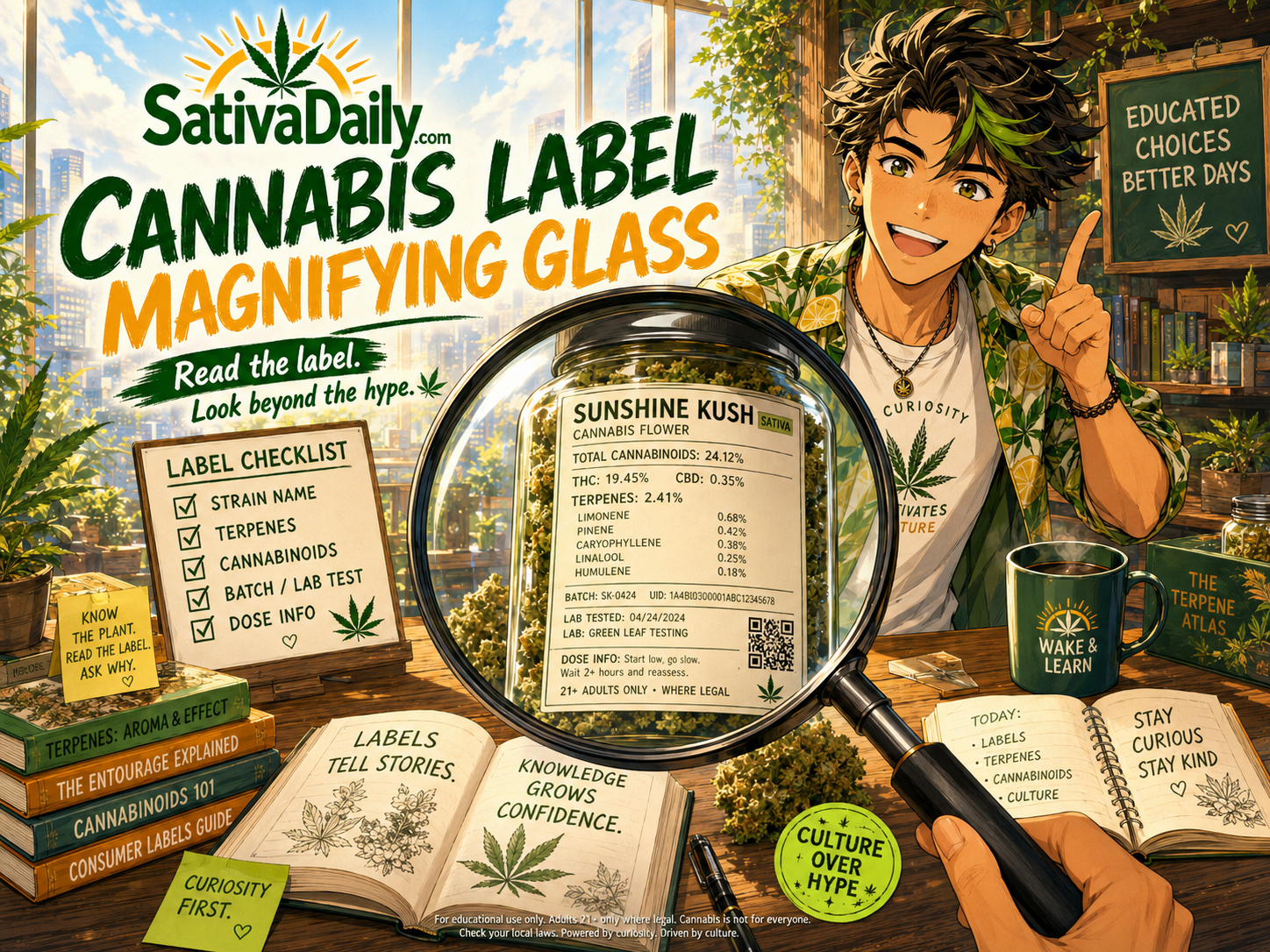
- What are the THC and CBD numbers?
- What terpenes are listed, and in what amounts?
- Is this flower, edible, vape, tincture, concentrate, or something else?
- What does the warning label say?
- Is there batch, testing, ingredient, or date information?
- What is my tolerance, setting, schedule, and plan for getting home safely?
Terpene context without terpene worship
Terpenes can provide useful aroma clues. Limonene, pinene, caryophyllene, linalool, myrcene, and other compounds often appear in discussions of sativa-style experiences. But terpene names should not become a new set of magical guarantees.
Use terpene information as part of the map. Do not confuse the map with the destination.
A terpene profile is more useful than a cartoon stereotype, but it still does not predict every person’s experience.
Myth-busting is also safety work
When people believe every sativa product will act the same way, they can make careless decisions. The safer approach is to read the label, respect timing, avoid driving, and keep products secure.
Adults 21+ only where legal. Do not drive or operate machinery after using cannabis. Keep products away from kids and pets. This site is educational only and is not medical or legal advice.
The bottom line
Sativa effects are not a single switch. They are a story people tell around product categories, chemistry, aroma, dose, setting, and personal experience. Enjoy the folklore, but do not let the folklore write your safety plan.
Captain Limonene is fun. Your label is more important.